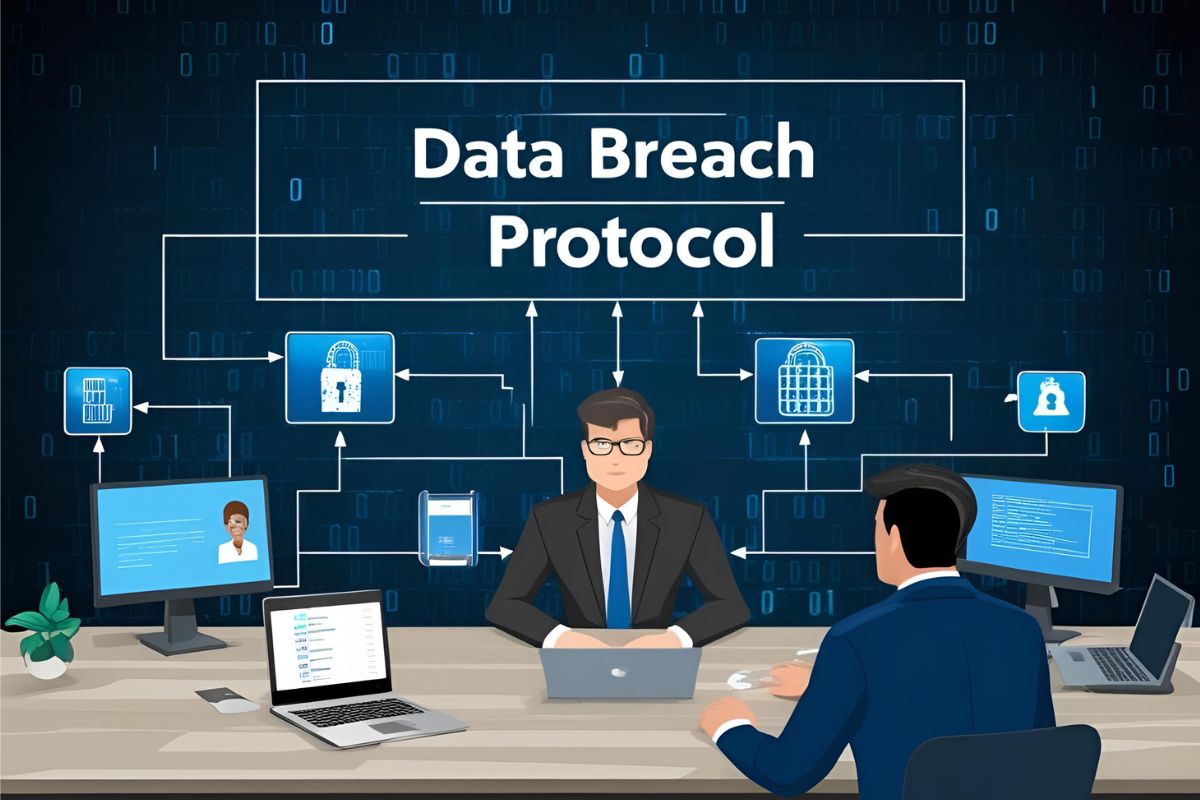
Data Breach Protocol: Steps to Take Immediately After a Cyber Attack
A data breach is more than just a technical event—it’s a business crisis. When cybercriminals gain unauthorized access to sensitive systems, the damage can be swift, far-reaching, and devastating. Regulatory penalties, reputational fallout, financial loss, and customer attrition are just a few of the consequences organizations face if they respond poorly or too slowly.
Speed, precision, and coordination are critical in the moments following a breach. This article outlines the immediate steps every organization should take when a cyber attack occurs, offering a framework grounded in cybersecurity best practices and legal compliance.
1. Detect and Contain the Breach
The first priority is identifying that a breach has occurred and preventing further damage.
Immediate Actions:
- Alert internal teams (IT, cybersecurity, legal) as soon as suspicious activity is detected.
- Isolate affected systems from the network to contain the intrusion and stop data exfiltration.
- Preserve volatile data (e.g., RAM contents, running processes, open network connections) using forensic capture tools.
- Avoid rebooting or altering systems, which could destroy valuable evidence.
Containment should be done carefully. Overly aggressive shutdowns can tip off attackers or erase traces necessary for the investigation.
2. Initiate the Incident Response Plan
An effective response depends on preparation. Organizations should already have an incident response plan (IRP) in place. If that plan exists, activate it immediately.
Key elements of the IRP include:
- Defined roles and responsibilities (CISO, legal counsel, communications, etc.).
- Internal and external communication protocols.
- Integration with third-party forensics and legal support.
- Escalation paths and authority to act.
If an IRP is not available or is outdated, assemble a cross-functional crisis team and follow structured breach-handling frameworks like NIST or SANS as a temporary fallback.
3. Assess the Scope and Impact
Once systems are contained, shift to a detailed assessment of the breach.
Critical Questions to Answer:
- What systems and data were accessed?
- How did the attackers gain entry?
- How long were they in the environment?
- Were sensitive customer, employee, or financial records exposed?
Forensic analysts will use logs, file metadata, intrusion detection system records, and endpoint telemetry to map the attacker’s footprint. This phase may also require examining cloud logs and third-party integrations.
4. Notify Legal Counsel and Regulatory Authorities
Data breaches carry legal obligations. Involve internal or external counsel immediately to evaluate compliance risks.
Key Considerations:
- Data privacy laws (e.g., GDPR, CCPA, HIPAA) often require notification within 24–72 hours.
- Industry-specific mandates (e.g., PCI-DSS, SOX) may apply.
- Law enforcement may need to be notified, especially in cases involving financial fraud or national security implications.
Failure to notify regulators in time can result in significant fines and long-term brand damage.
5. Communicate Transparently with Stakeholders
Misinformation spreads quickly. Clear, controlled, and timely communication is essential to maintaining trust.
Stakeholders to Consider:
- Affected customers or users
- Employees
- Business partners and vendors
- Investors or board members
- The public (if required by law or reputation concerns)
Tips for Communication:
- Avoid speculation or overpromising.
- Stick to facts verified by forensic teams.
- Provide guidance on what users should do (e.g., reset passwords, watch for phishing).
- Designate a spokesperson and prepare for media inquiries.
In parallel, set up secure hotlines or help desks to support affected parties and manage incoming questions.
6. Launch a Full Forensic Investigation
While immediate containment is critical, understanding the how and why of the breach is what prevents recurrence.
A comprehensive investigation should:
- Determine the attack vector (e.g., phishing, credential stuffing, zero-day exploit).
- Evaluate whether backdoors or persistence mechanisms remain.
- Identify lateral movement and privilege escalation.
- Correlate indicators of compromise (IOCs) with known threat actor profiles.
The outcome should be a detailed timeline of the attack, a list of compromised systems and data, and recommendations for remediation and hardening.
7. Remediate Vulnerabilities and Strengthen Defenses
The breach response isn’t complete until exploited weaknesses are fixed and additional controls are deployed.
Remediation tasks include:
- Patching software and firmware.
- Resetting passwords and enforcing multi-factor authentication (MFA).
- Enhancing endpoint detection and response (EDR) capabilities.
- Reviewing access controls and privilege management.
- Segmenting networks to contain future breaches.
Additionally, conduct a full review of your incident response plan, backup protocols, and vendor risk management strategies.
8. Document Everything
Every action taken during and after a breach must be documented in detail. This serves three purposes:
- Establishes a defensible timeline for regulatory review.
- Provides context for post-incident audits and insurance claims.
- Creates a blueprint for continuous improvement in cyber resilience.
Ensure that logs, screenshots, system images, communication records, and meeting notes are archived securely and access-controlled.
9. Conduct a Post-Incident Review
After the dust settles, a formal post-incident review must be held with all relevant stakeholders.
Review topics:
- What went well and what failed?
- How quickly was the breach detected and escalated?
- Were the response roles and communication channels clear?
- What improvements are needed in policies, training, or technology?
These insights should be captured in an updated incident response playbook and shared across the organization to foster a culture of preparedness.
Conclusion
A data breach is a defining moment for any organization. The speed and integrity of your response can mean the difference between a recoverable incident and a crisis that spirals into litigation, lost business, and long-term damage. By following a disciplined protocol grounded in industry best practices—and by learning from every incident—organizations can turn a breach into an opportunity to build stronger, more resilient systems.
Being breached isn’t the ultimate failure. Failing to respond with clarity and accountability is.