Digital Footprints: What Your Metadata Reveals in a Forensics Investigation
In the digital age, every action you take online leaves behind a trail. These traces, often referred to as digital footprints, are not just limited to the websites you visit or the social media posts you share. A lesser-known but incredibly significant part of your digital trail is metadata—the hidden data embedded in files, documents, and communications that can reveal more about you than you might expect.
In the world of computer forensics, metadata plays a crucial role in investigations, helping experts piece together a timeline of events, identify individuals involved, and uncover hidden or deleted information. In this article, we will explore what metadata is, how it is used in forensics investigations, and the implications it holds for privacy and legal cases.
What is Metadata?
Metadata is essentially “data about data.” It provides detailed information about a file, such as when it was created, modified, accessed, or transferred, and who was involved in these actions. This information is stored in the file’s properties and is often invisible to the end user unless intentionally retrieved by specific tools or during an investigative process.
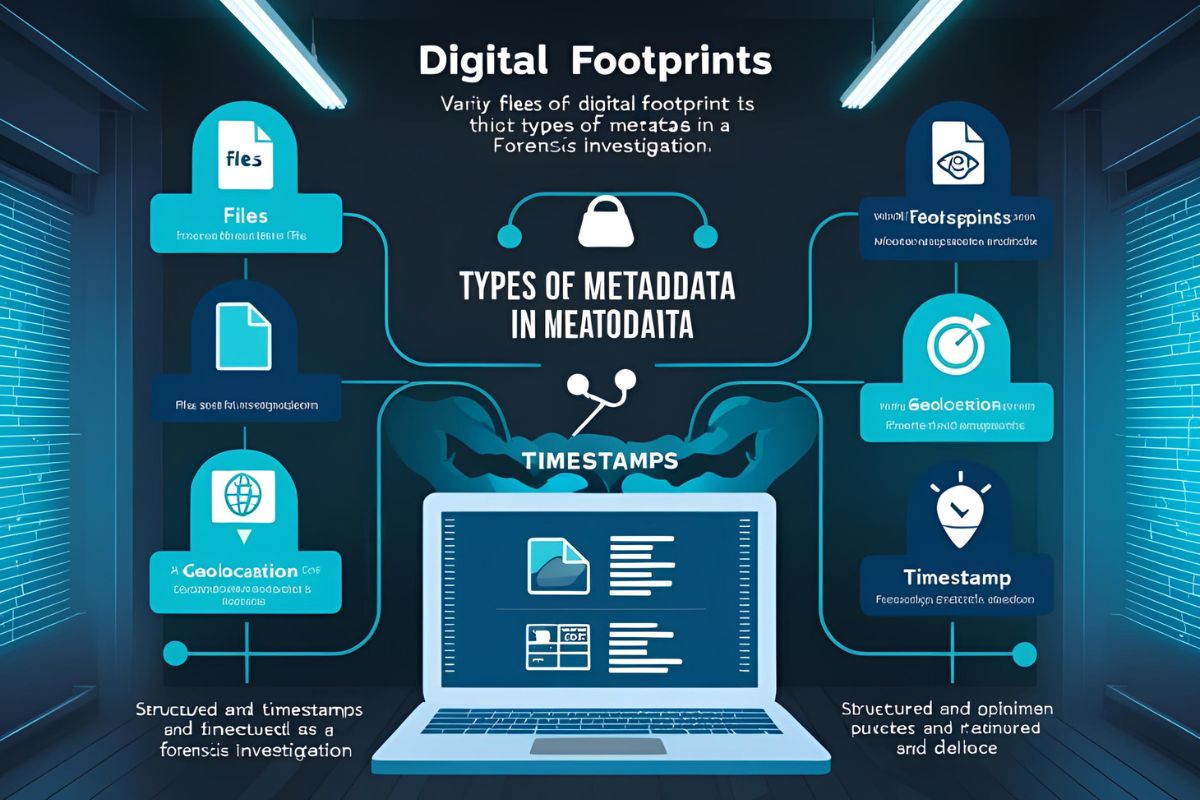
Common types of metadata include:
- Creation date: The exact date and time a file was created.
- Modification date: When the file was last edited.
- Access date: When the file was last accessed or opened.
- File size: How large the file is in terms of data.
- File type: The format of the file (e.g., .docx, .pdf, .jpg).
- Author or creator: The name of the individual or system that created the file.
- Location data: Geographic information associated with digital media, such as GPS coordinates embedded in photos.
- Device or system information: Details about the device or software used to create or edit the file.
The Role of Metadata in Digital Forensics
In a forensics investigation, metadata is often the first place investigators turn to uncover key evidence. It can help build a narrative of events, verify the authenticity of documents, and even identify attempts to conceal evidence.
1. Establishing a Timeline
One of the most important uses of metadata in digital forensics is to create a timeline of events. For example, if investigators are looking into a potential data breach, metadata can help them track when files were accessed, modified, or deleted. By examining these timestamps, forensic experts can identify when an attacker infiltrated a system or when critical data was exfiltrated.
- Example: If a document is found on a suspect’s computer with a creation date matching the time of a specific breach, investigators can correlate the file’s existence with the alleged attack.
2. Uncovering Deleted Information
Even when files are deleted, metadata may still be recoverable. Forensic tools can often retrieve “deleted” metadata, which can reveal a history of file interactions and recovery attempts. This information is invaluable in proving that files were tampered with, accessed, or altered.
- Example: In a case involving fraudulent activity, metadata might show that a document was created long after the official document was signed, revealing tampering attempts.
3. Authentication and Integrity Checks
Metadata is key in validating the authenticity of digital evidence. If the metadata surrounding a file shows discrepancies (e.g., modification timestamps that don’t align with the content), it could indicate tampering or fraud. By analyzing metadata, forensics experts can ensure that the data presented as evidence hasn’t been altered or falsified.
- Example: If a document purporting to be a legal contract has metadata showing it was edited after it was supposed to be finalized, this could be evidence of manipulation.
4. Tracing File Movement
Metadata can also show how a file has moved through systems and devices. This feature is particularly important in investigations involving intellectual property theft, data breaches, or corporate espionage. It can reveal whether a file was transferred via email, downloaded, or uploaded to cloud storage.
- Example: In an investigation of a corporate espionage case, metadata can indicate that a document containing sensitive information was transferred from the company’s internal server to a USB device on a specific date.
Implications of Metadata in Privacy and Legal Cases
While metadata is an invaluable tool in digital forensics, it also raises important privacy and legal questions. The ability to trace nearly every action a person takes on a digital device makes metadata a double-edged sword. On one hand, it helps solve crimes and uncover important evidence. On the other, it can infringe on privacy rights, especially when obtained without proper authorization.
1. Privacy Concerns
Because metadata can reveal detailed information about a person’s activities, such as their location, relationships, and behavior patterns, it can be considered an invasion of privacy if accessed or used improperly. In some cases, metadata can expose sensitive personal information, even if the content of the file itself is not visible.
- Example: A photo taken with a smartphone might contain location data, revealing where the photo was taken, even if the file itself doesn’t contain an explicit address. This data could be used to infer a person’s movements or identify private locations.
2. Legal Considerations
The use of metadata as evidence in a legal case is subject to strict rules of admissibility. For metadata to be accepted in court, it must be verified and shown to be authentic. Investigators must ensure they follow proper chain-of-custody procedures when handling metadata to prevent claims of tampering or mishandling.
- Example: In a lawsuit involving a breach of contract, metadata showing the modification of a document after it was signed could be a smoking gun, but only if the metadata is proven to be untampered with.
3. Regulatory Compliance
Organizations must be cautious about how they store and manage metadata, as improper handling could violate privacy regulations such as the General Data Protection Regulation (GDPR) in Europe or California Consumer Privacy Act (CCPA) in the United States. These regulations require that individuals have control over their personal data and may mandate the deletion or anonymization of metadata upon request.
How to Protect Yourself from Metadata Risks
For individuals and organizations concerned about metadata privacy, several best practices can help reduce exposure:
- Regularly Clean Metadata: Tools such as Microsoft Office’s Document Inspector or ExifTool can help you remove metadata from files before sharing or publishing them.
- Use Encryption: Encrypt sensitive files to prevent unauthorized access to both the content and its metadata.
- Understand Metadata in Your Devices: Be aware of what metadata your devices are collecting—such as location data—and adjust settings to limit unnecessary data collection.
Conclusion: The Power of Metadata in Digital Forensics
Metadata provides a crucial window into the past, revealing important details about the creation, movement, and modification of digital files. In digital forensics, it is a powerful tool for establishing timelines, authenticating evidence, and uncovering the truth behind digital crimes. However, as with any tool, it must be handled carefully to respect privacy and legal rights.
As technology advances and digital footprints become more intricate, understanding the significance of metadata in forensic investigations will become even more critical. By appreciating its potential and risks, both individuals and organizations can better navigate the complex world of digital evidence recovery and protection.